

My Work
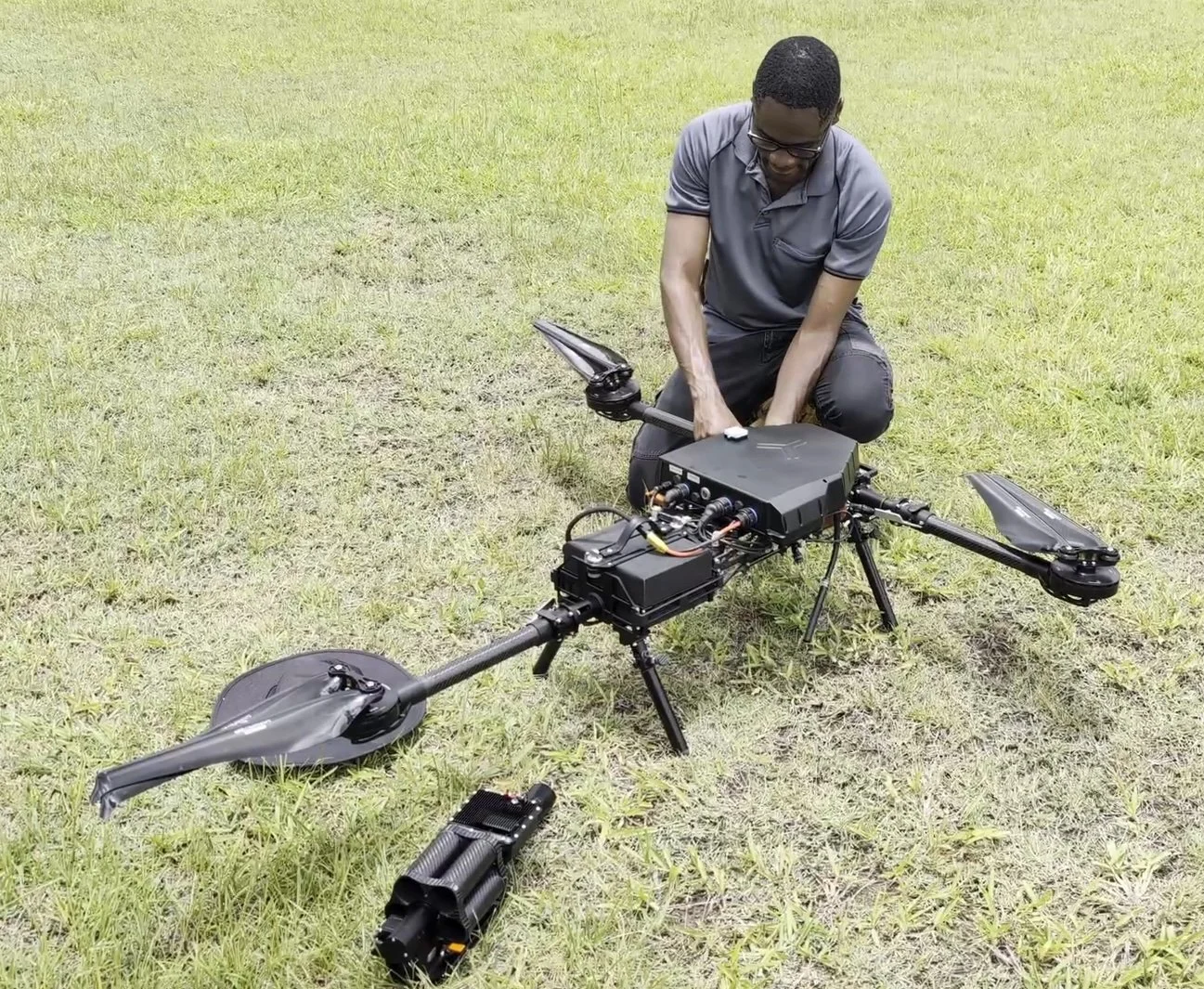
Skyborne was where I moved from maintaining and modifying aircraft systems into the world of UAV research and development. The work was hands on, fast paced, an environment I thrive in. I would be building a prototype in the workshop one day, troubleshooting it in the field the next, then returning to update the design and documentation based on what we had learned.
I initially supported the CMI-03 platform through maintenance, calibration, upgrades, fault diagnosis and flight operations. I then became closely involved in the development of the CMI-04, contributing to prototype integration, initial aircraft builds, wiring and subsystem installation, pre- and post-flight inspections, troubleshooting and field trials. Working directly with the hardware gave me a practical view of where designs performed well and where they needed improvement. I regularly fed those findings back to pilots and engineers, recommending changes to design, mechanical integration, assembly processes and maintenance access for later revisions.
One of the largest projects I took on was the Mugin EV350 VTOL platform for DSTG field trials. Starting with a bare airframe and a collection of separate components, I designed and documented the interconnect architecture, and integrated the Cube Orange flight controller, VectorNav navigation system, EO payload, onboard computing, radio, telemetry, power distribution and battery-monitoring systems. I supported the aircraft through preparation, testing and field operations, acting as safety pilot, providing live monitoring, troubleshooting and repairs when required. After the first trials proved the concept, I completely rebuilt the airframes to incorporate the lessons learned and produce a cleaner, more reliable configuration.
The role also gave me broad exposure beyond complete aircraft builds. I built and operated HIL test setups for flight-control, payload and EO systems, calibrated servomotors and payloads, performed PCB inspection and fine-pitch rework under a microscope, and supported ongoing upgrades across multiple platforms. I also wrote the company’s first detailed build and maintenance manuals, wiring documentation and QA procedures, giving technicians and operators a clearer basis for assembling, inspecting and maintaining the systems.
The most rewarding part was being able to follow a design all the way through, from an early idea or prototype, into flight testing, and then back into the workshop for the next revision. That experience strengthened my ability to work between engineering disciplines and turn incomplete designs into practical, supportable systems.
Cobham Aviation Services Australia
At Cobham Aviation Services, I transitioned from structured environments into the dynamic world of R&D for mission-critical systems. Working on the Australian Border Force's Coastwatch fleet of Bombardier Dash-8 aircraft and Bombardier Challenger 604 opened up new creative possibilities that fundamentally changed my approach to aviation electronics.
My responsibilities centered around designing and troubleshooting sophisticated mission systems including optical sensors, power distribution networks, communication radios, and weather radar installations. The environment was fast-paced, with technical documentation constantly evolving as requirements shifted which was a stark contrast to my previous work.
One of my proudest achievements was developing the video distribution unit for the Australian Border Force Dash-8 Coastwatch . I had complete ownership of the project, selecting components and creating the electrical schematic that allowed video signals from various mission systems to be dynamically displayed across multiple screens. This gave operators crucial flexibility during surveillance operations.
Another technical highlight came when I needed to integrate an obsolete VHF radio system with newer equipment. I designed a custom VHF radio programmer using an Arduino and C++, which automatically configured the radio at power-up. This project sparked my passion for programming and opened my eyes to how software could solve complex hardware challenges.
The retrofitting work for the Australian Maritime Safety Authority's search and rescue aircraft brought unique challenges—coordinating with defence personnel, adapting to changing requirements, and ensuring every system worked flawlessly in critical situations. These high-stakes projects taught me to maintain precision while working under pressure, a skill that continues to serve me today.
Cobham marked a pivotal shift in my career, from following rigid protocols to embracing innovation and creative problem-solving—a transition that perfectly aligned with my natural inclinations as an Aerospace Specialist.
Bristow Defence Industries

I started my aerospace avionics career at Bristow Defence Industries, qualifying as an Aircraft Maintenance Avionics Engineer (AME). Earning my private pilots licence a year earlier gave me a deep passion for anything that flies, and so I chose this path with a clear goal: to build a fulfilling career that combines aviation with hands on electronics and systems work.
I was immersed in avionics from day one, joining a Type G heavy maintenance check on the AS332 M1 Super Puma. My early tasks were hands-on and direct, as my mentors preferred a ‘learn by doing’ approach to instructing which I resonate with. As my technical competence and familiarity with the aircraft developed, the scope of my work extended to flight-line maintenance, diagnosis and rectifications, modifications, calibrations, refurbishments and new installations. This growth and development was reinforced by formal type-specific training on the AS332 M1 Super Puma avionics suite.
I was selected to deploy as part of the Singaporean Armed Forces Exercise Wallaby in 2015, where I operated in demanding field environments with minimal support from senior AMEs. I was required to perform rectifications on avionics faults within tight deadlines, accommodate last-minute requirements changes, and communicate directly with senior military personnel in order to balance my unyielding safety-first priority with mission needs.
This deployment would go on to be the defining period of my training.
Training in a military context instilled values I’ve carried with me throughout my career such as a safety-first mindset, precision work, thorough documentation, and flexibility in the face of changing conditions. I’m glad I began with the 126 Squadron of the Royal Singaporean Air Force and am grateful for what the experience taught me.
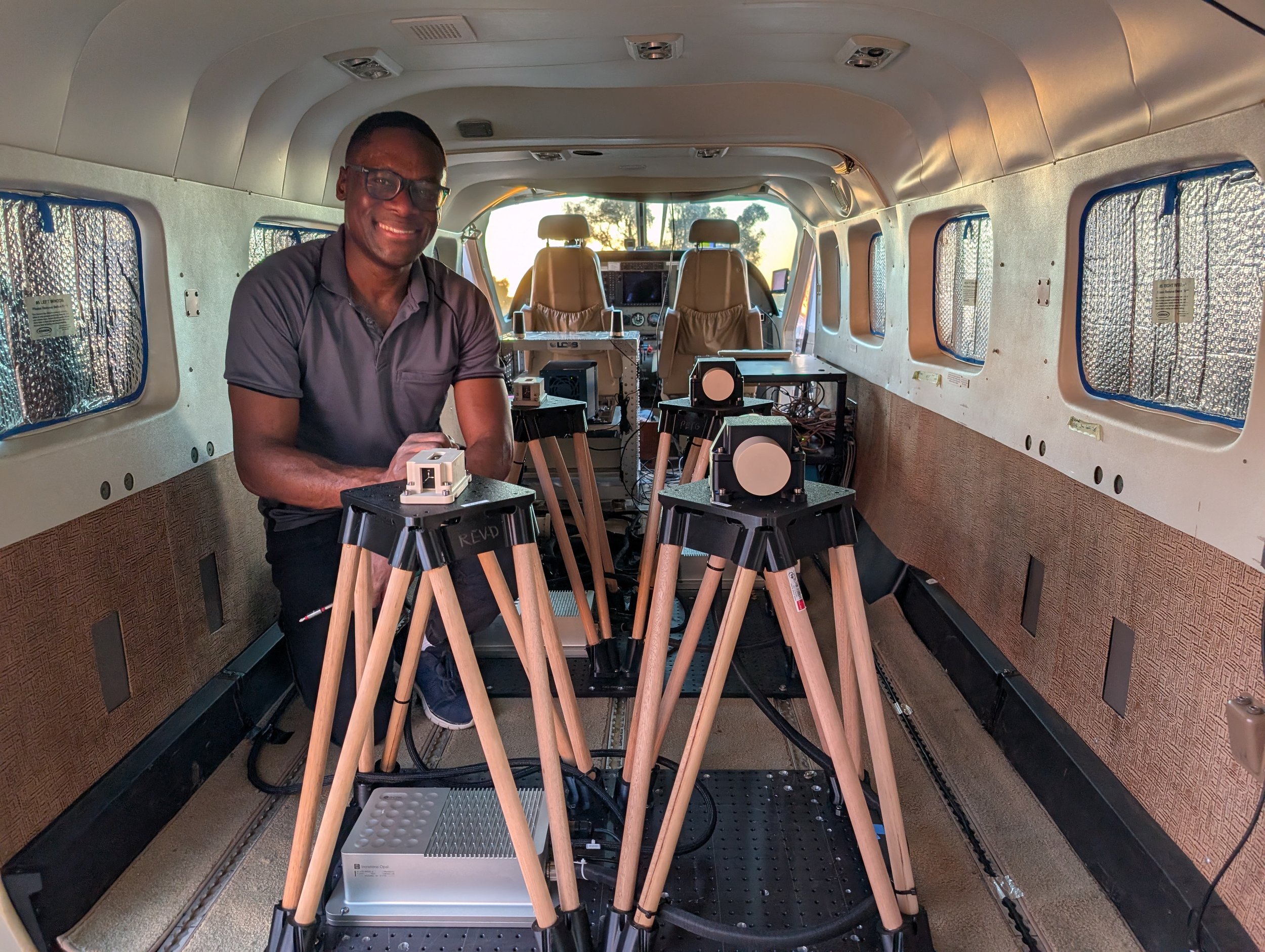
I first learned about Q-CTRL while researching new approaches to GNSS-denied navigation and reading about the Ironstone Opal quantum magnetometer. I was amazed by both the pace of its development and its potential to move quantum sensing beyond the laboratory and into practical aerospace and maritime applications. Its recognition by TIME as one of the Best Inventions of 2025 reinforced my desire to join a company turning frontier research into useful technology.
I joined Q-CTRL as a Senior Systems Technician within the Sensing division, working alongside scientists and engineers across the full development lifecycle. My work includes translating requirements into practical designs, selecting components and fabrication methods, building and integrating prototypes, developing test approaches, investigating failures and supporting airborne field trials.
One of my main contributions has been designing the ruggedised interconnect architecture and building the first prototype for the Ironstone Opal airborne magnetometer. I selected the connectors, wire, shielding, terminations and tooling, produced the wiring diagrams, built the prototype harnesses and refined the design through testing. I also supported DO-160G environmental qualification for the system, contributing to the development of the first quantum magnetic-anomaly navigation product approved for flight on an Airbus commercial platform.
Field trials are one of the parts of the role I enjoy most. Real operating conditions continue to reveal problems that don’t appear in the lab, requiring live data analysis, physical fault isolation, practical repairs and close collaboration across disciplines. I find the cycle of testing, learning and applying those lessons to the next design iteration particularly rewarding.
I have also worked to improve the traceability and reproducibility of experimental hardware, introducing Q-CTRL’s first serialised configuration management process and producing controlled build records, wiring diagrams, test procedures and maintenance documentation.
As Lab Safety Officer, I establish controls for Class 4 laser and high-risk chemical work, support incident investigations and help improve laboratory practices. Safety is something I care deeply about, as ambitious research can only succeed when the people conducting it are properly protected and supported.
What I value most about Q-CTRL is the continual learning. Quantum sensing brings together electronics, optics, mechanics, software, atomic physics and aerospace systems, regularly pushing me beyond my existing knowledge. The role has reinforced my belief that successful R&D hardware must do more than work once on a bench, it has to be testable, maintainable, traceable and robust enough to perform in the real world.